
Aakash Deep's POC
12/23/20251 min read
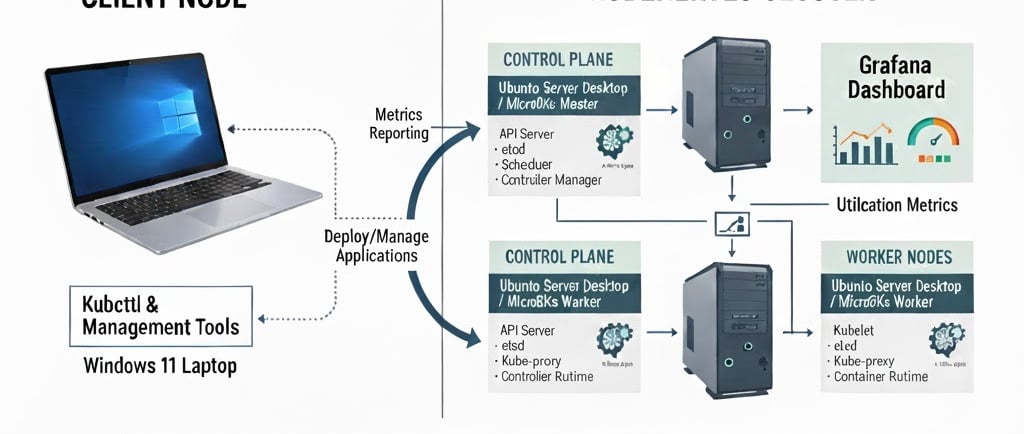
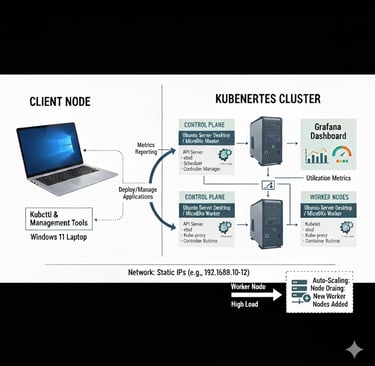
Hyper-V based Kubernetes & DevOps Architecture
We have started building a centralized DevOps & Kubernetes environment on a Windows Server using Hyper-V.
The screenshot shows our current Hyper-V environment with multiple Virtual Machines running and communicating successfully.
🖥️ Infrastructure Overview
• Windows Server (Host Machine)
• Hyper-V enabled (system-level virtualization)
Virtual Machines on Hyper-V
• 1 Kubernetes Master Node
• 3 Kubernetes Worker Nodes
• Each VM is allocated dedicated CPU and memory
• All VMs are running and stable
🌐 Networking & Communication
• All Virtual Machines are connected using a NAT-based Virtual Switch
• NAT enables:
• VM-to-VM communication within the same virtual network
• Internet access for package downloads, updates, and tools
• This setup ensures secure internal communication while keeping the environment isolated from the external network
⚙️ DevOps & Kubernetes Setup
• GitHub
• Source code management and version control
• Jenkins
• CI/CD pipelines for build and deployment automation
• Kubernetes Cluster
• Master node managing the cluster
• 3 Worker nodes handling application workloads
• Features to be enabled:
•✅ Auto-scaling
•✅ Auto-healing
•✅ Self-managed workloads
📊 Monitoring & Observability
• Grafana will be configured for centralized monitoring
• Cluster, node, and application-level metrics will be visualized
🤖 Future Scope
• AI-based agents for:
• Automated monitoring
• Predictive failure detection
• Intelligent self-healing actions within the cluster
This setup is focused on real-world DevOps practices, scalability, and automation, aligned with production-grade architectures.
💡 More updates coming as we progress step by step.